Hoi An Silk Village is one of the prominent cultural attractions in Hoi An, famous for its traditional silk-reeling and weaving craft dating back over 300 years. This place not only recreates the manual silk-making process but also offers experiences in sightseeing, check-ins, and learning about Champa culture and the ancient Hoi An trading port.
If you are looking for a destination that is both close to the ancient town and deeply imbued with local cultural imprints, Hoi An Silk Village is a choice well worth considering in your journey to explore Hoi An.
Summary Table
| Information | Details |
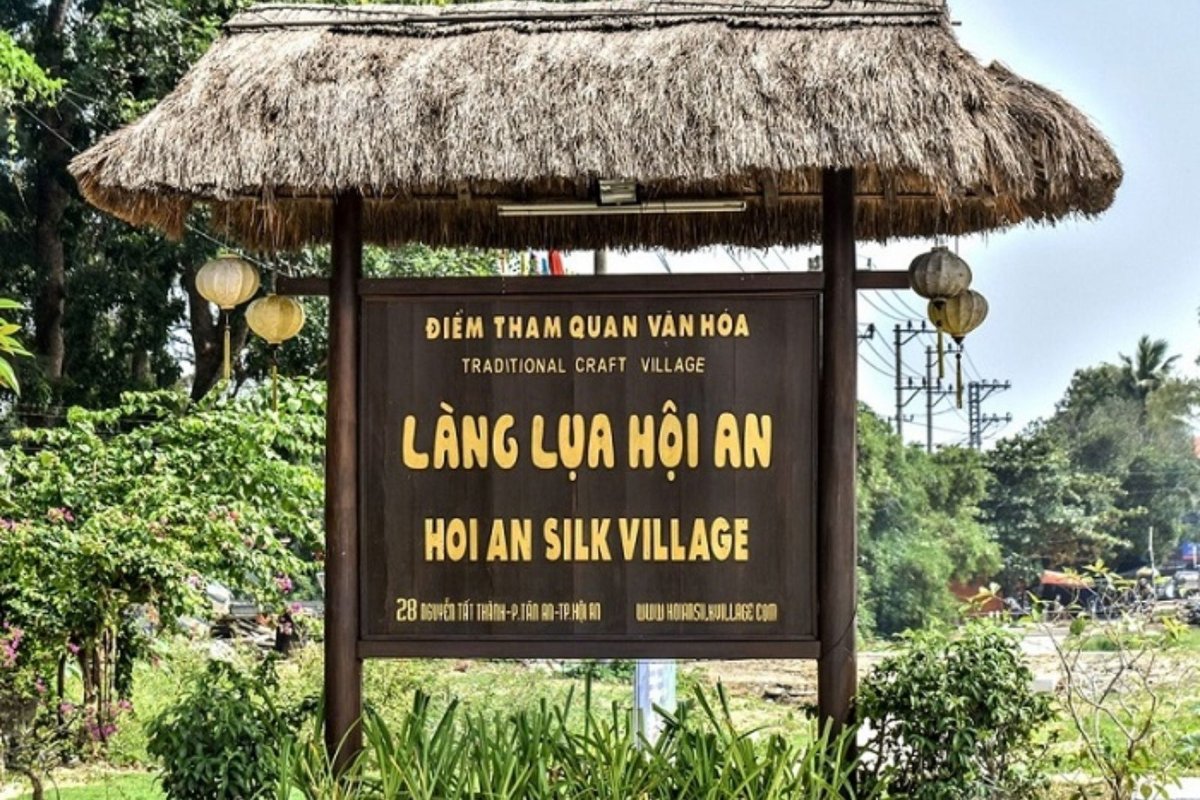
| Address | 28 Nguyen Tat Thanh, Hoi An |
| Distance to Ancient Town | Approximately 1km |
| Opening Hours | 08:00 – 17:00 |
| Sightseeing Ticket Price | Approximately 50,000 VND |
1. History of Hoi An Silk Village – A 300-Year Heritage
Hoi An Silk Village is not just a sightseeing spot but also an integral part of the developmental history of the ancient Faifo trading port. More than 300 years ago, when Hoi An was one of the busiest trading hubs in Southeast Asia, silk from the “Inner Realm” (Dang Trong) became a luxury commodity sought after by Japanese, Chinese, and Western merchants.
The formation of the silk village is the result of absorbing and blending the traditional weaving techniques of the Vietnamese people with the exquisite textile cultural heritage of the ancient Champa people. Through many historical ups and downs, there were periods when the craft of silk-reeling and weaving seemed to fade away; however, today’s Hoi An Silk Village ecological conservation area has successfully restored and preserved the stature of a renowned craft village, allowing the 300-year-old heritage to continue shining.
During the peak period of the Hoi An trading port in the 16th – 17th centuries, silk was one of the vital goods traded on the “Maritime Silk Road,” contributing to making Hoi An the busiest international commercial connection point in Southeast Asia.
2. Where is Hoi An Silk Village? How to get there
Hoi An Silk Village is located at 28 Nguyen Tat Thanh, Tan An Ward, Hoi An City, about 1km from the ancient town, making it very convenient to travel to.
From the center of the ancient town, visitors can travel by bicycle, motorbike, or taxi in just about 5–10 minutes. This is also a sightseeing spot often combined with locations such as Hoi An Ancient Town, Tra Que Vegetable Village, or Bay Mau Coconut Forest.
How to move: Thanks to the short distance, visitors can comfortably choose to walk, rent a bicycle, or ride a motorbike. From the center of the ancient town, you simply need to go along Ly Thuong Kiet street, turn into Nguyen Tat Thanh, and go a short distance further to see the gate of the vast silk village space, shaded by green trees.
3. Ticket Prices, Opening Hours & Essential Information
To proactively plan your exploration schedule, here is the basic information regarding operating times and sightseeing costs:
| Information | Details |
| Operating Hours | 08:00 – 17:00 (Every day of the week) |
| Entrance Fee | Approximately 50,000 VND/person (Self-guided sightseeing only) |
If you only wish to visit and take photos, the basic entrance ticket is sufficient. Meanwhile, experience packages are more suitable for international guests or tourists who want to delve deep into the traditional silk weaving craft. (Approximately 400,000 – 500,000 VND/person, including a tour guide, local cuisine buffet, and participation in craft-making activities).
4. What to See Inside Hoi An Silk Village
Hoi An Silk Village is designed as an ecological green space combined with a cultural museum space. Each area here authentically recreates the life cycle of a premium silk fabric.
4.1 Silkworm farming area
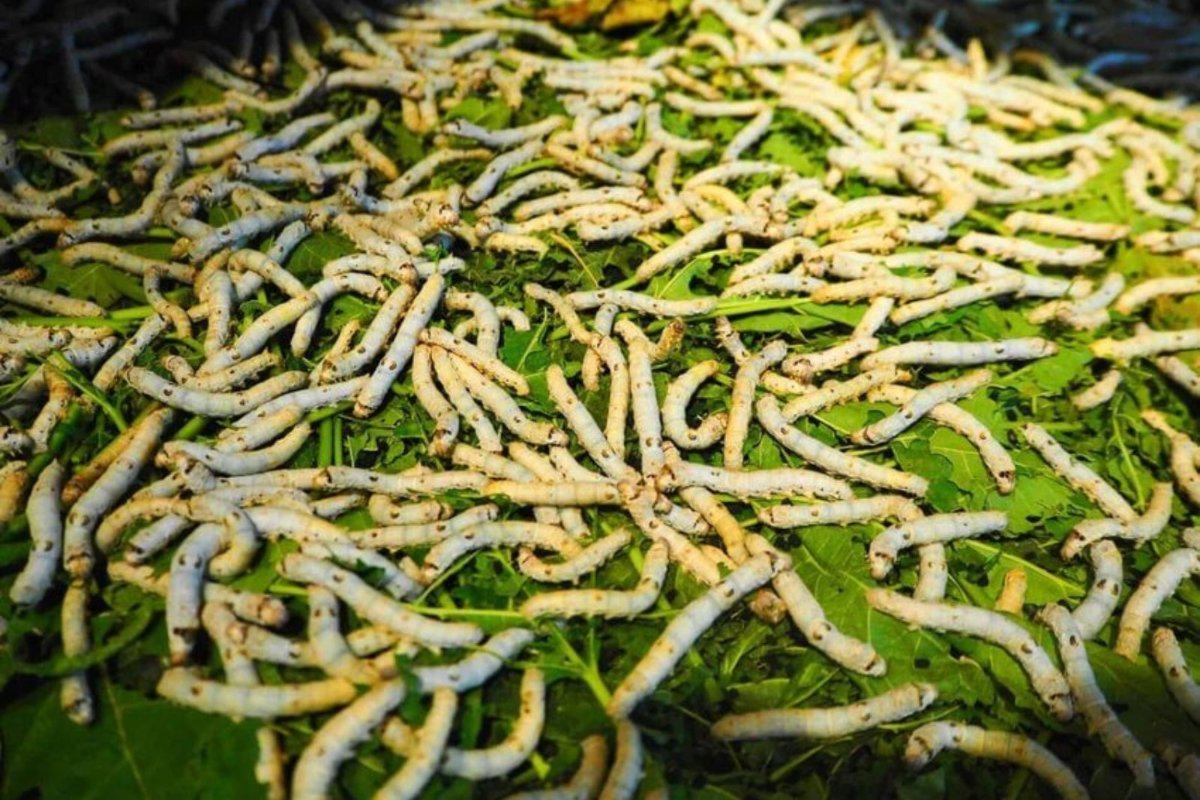
Starting the journey, you will wander into the shaded ancient mulberry garden, which includes rare Champa mulberry trees that have never been crossbred. Next is the silkworm rearing area, where visitors can witness firsthand the growth cycle of silkworms from being tiny larvae to eating mulberry leaves noisily and finally the process of spinning silk and forming shimmering golden cocoons.
Visitors can directly observe each stage of silkworm development, from rearing and feeding with mulberry leaves to manual cocoon reeling and silk spinning. This is also an area loved by many families with young children during their visit
4.2. Traditional Silk Weaving Process
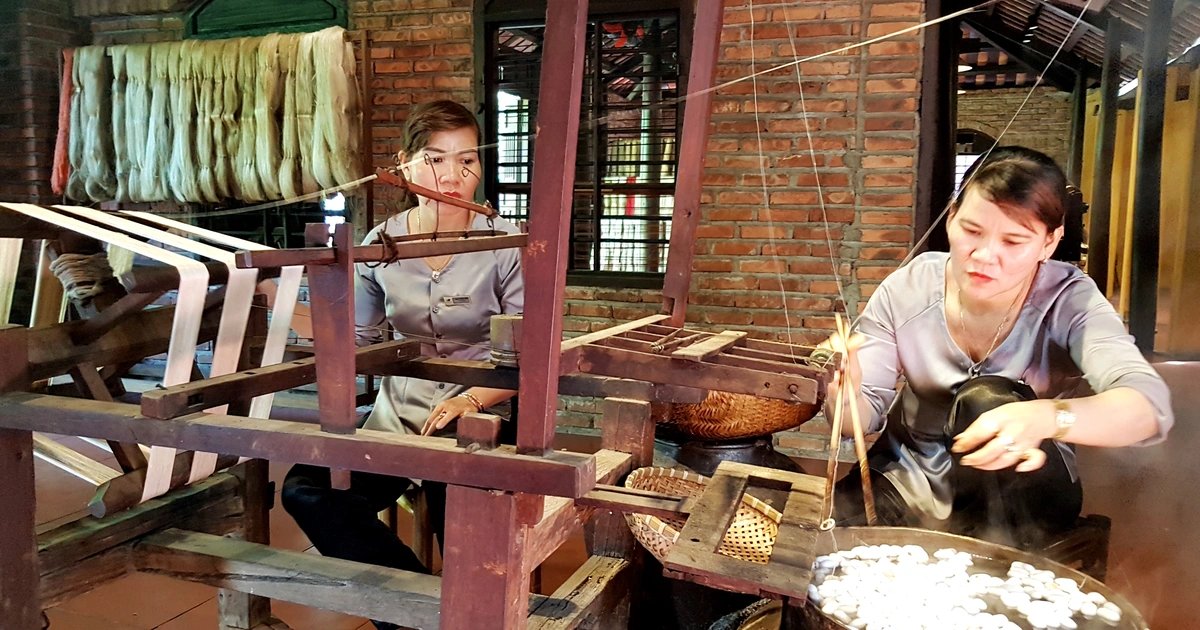
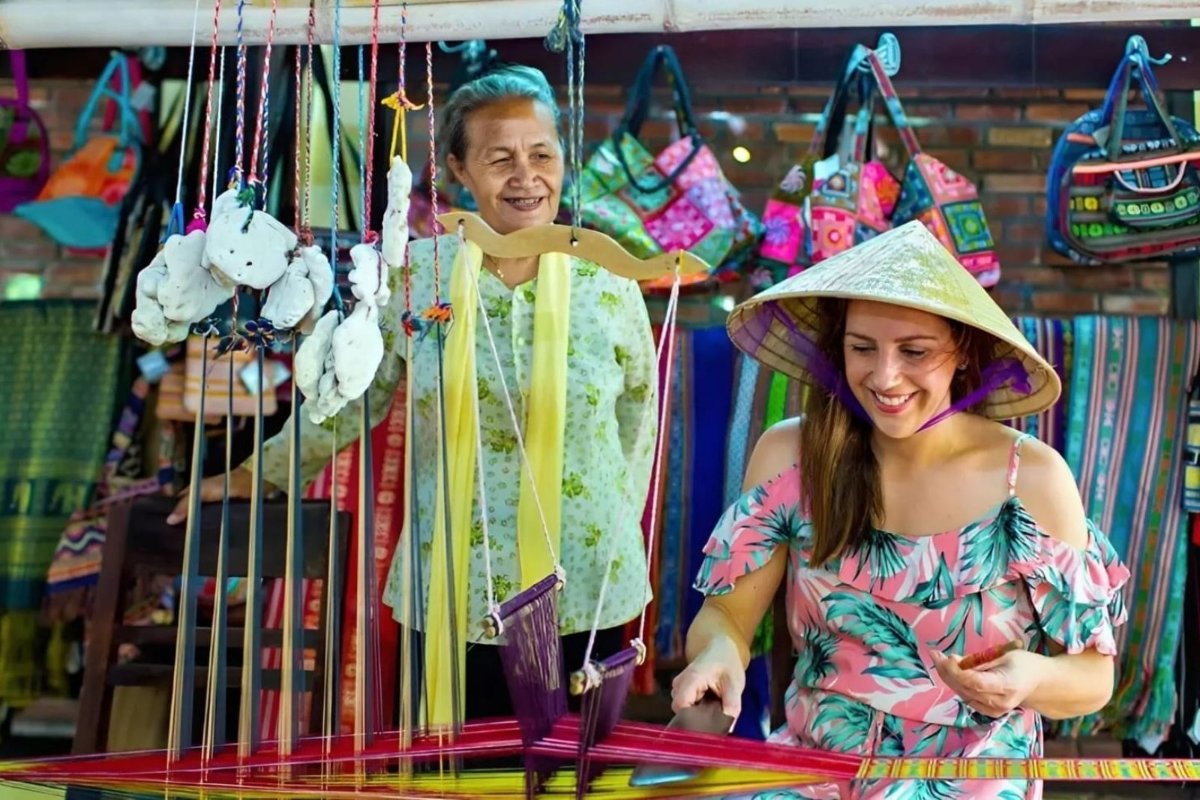
At the weaving workshop area, the clacking sound of ancient wooden looms will take you back in time. Champa and Vietnamese artisans, with their swift hands, diligently thread delicate silk fibers to weave soft silk lengths with sophisticated patterns. Visitors can directly touch the silk pieces that have just left the loom to feel the wonderful coolness and luster.
At the workshop, visitors will directly observe how artisans operate traditional looms to create handmade silk pieces. Some areas even allow guests to try their hand at silk spinning or weaving under the guidance of artisans.
4.3 Traditional costume exhibition
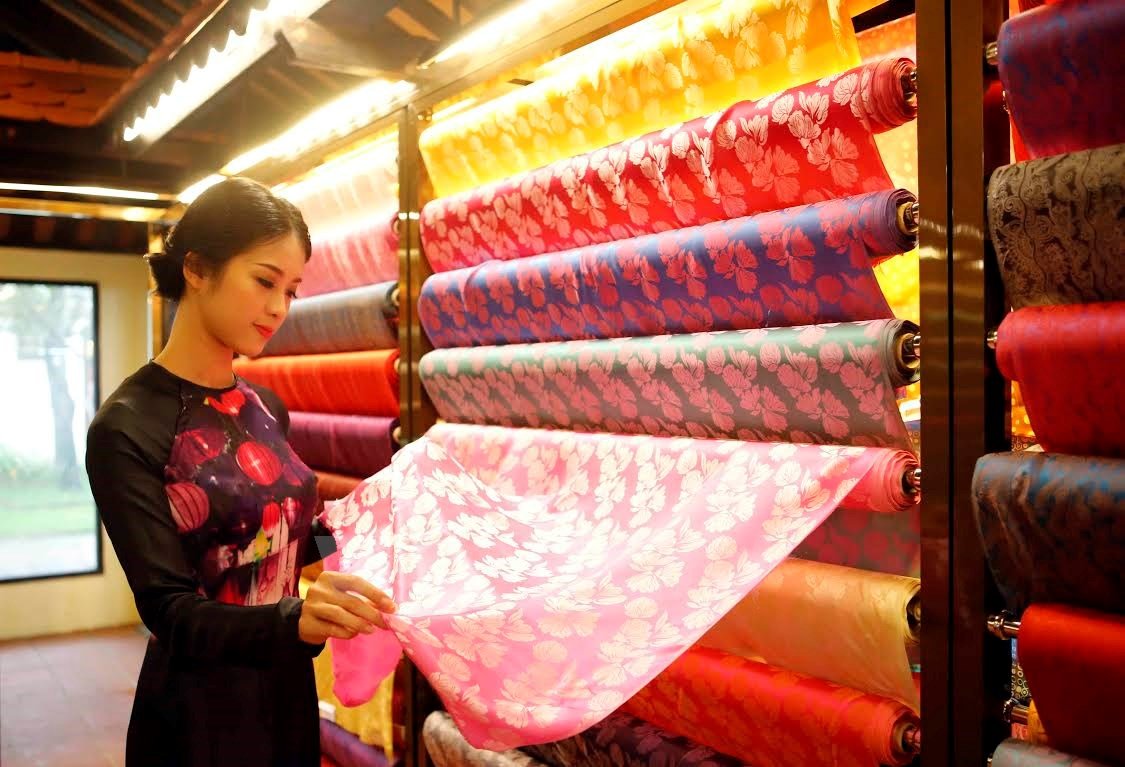
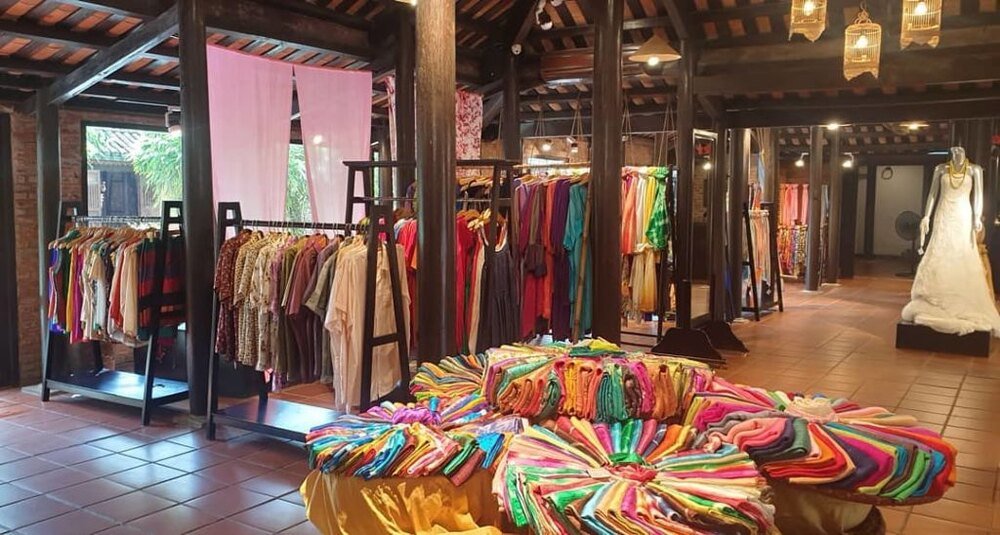
This is a space honoring the beauty of traditional fashion. Visitors can admire a collection of more than 100 graceful Ao Dai, as well as traditional costumes of the Champa people and Vietnamese ethnic minorities through various historical periods.
4.4. Architectural Space & Check-in
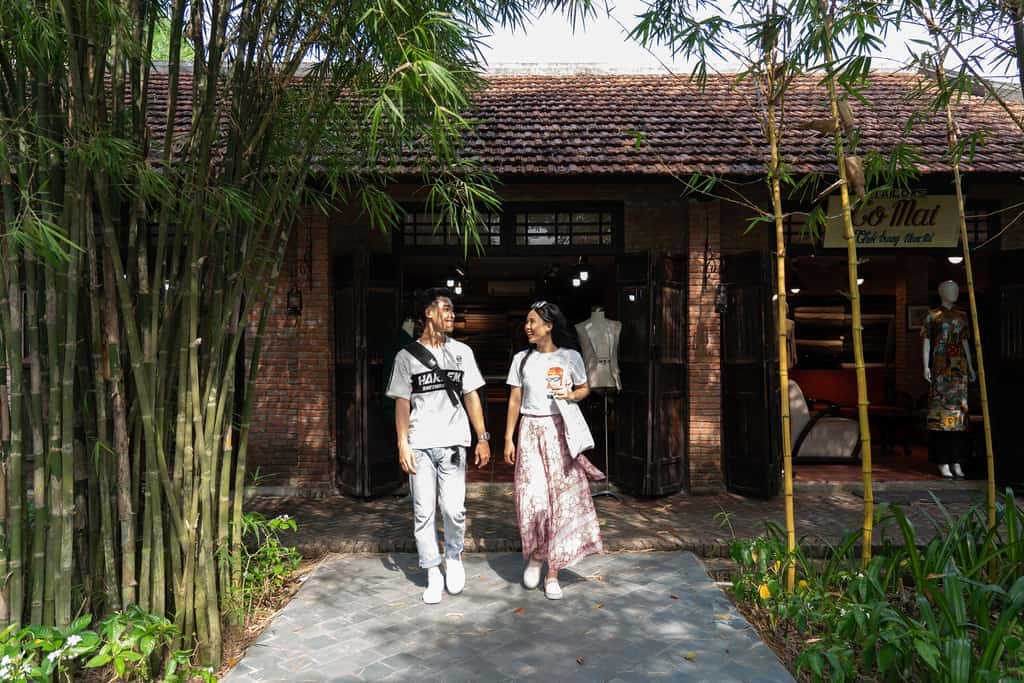
The entire silk village is built according to the ancient “Nha Ruong” architecture of Quang Nam, interspersed with fragrant lotus ponds and paths filled with greenery. This nostalgic architecture brings a quiet, poetic atmosphere, providing a perfect backdrop for cultural check-in photos.
The lotus pond area, ancient wooden houses, and tree-lined paths are favorite check-in spots for many tourists. If you want to take beautiful photos, you should go in the morning or early afternoon when the natural light is quite beautiful and it is not too crowded.
5. Best Experiences at Hoi An Silk Village
More than just sightseeing, the Silk Village offers direct interactions that make your trip more memorable than ever:
- Try being an artisan yourself: You can personally try picking mulberry leaves to feed the silkworms, spinning silk, or sitting at a loom under the enthusiastic guidance of local artisans.
- Rent traditional costumes: Put on a premium silk Ao Dai, stroll through mossy wooden houses, and capture beautiful moments.
- Enjoy Quang region cuisine: If you purchase a full tour package, you will enjoy a “buffet ganh” (traditional street food style buffet) lunch with famous specialties such as Cao Lau, Mi Quang, Banh Beo, and Banh Xeo right in the rustic garden space.
- Buy authentic silk as gifts: At the showroom, you can rest assured in choosing 100% pure silk products such as scarves, ties, and Ao Dai as valuable gifts for your loved ones.
If you love culture and traditional craft villages and want to find a quiet location near the ancient town, Hoi An Silk Village is an experience well worth trying. The space here leans toward cultural learning, handicraft experiences, and photography rather than vibrant entertainment activities.
This destination is particularly suitable for international tourists, families with young children, or visitors who want to explore the cultural depth of Hoi An beyond the ancient town.
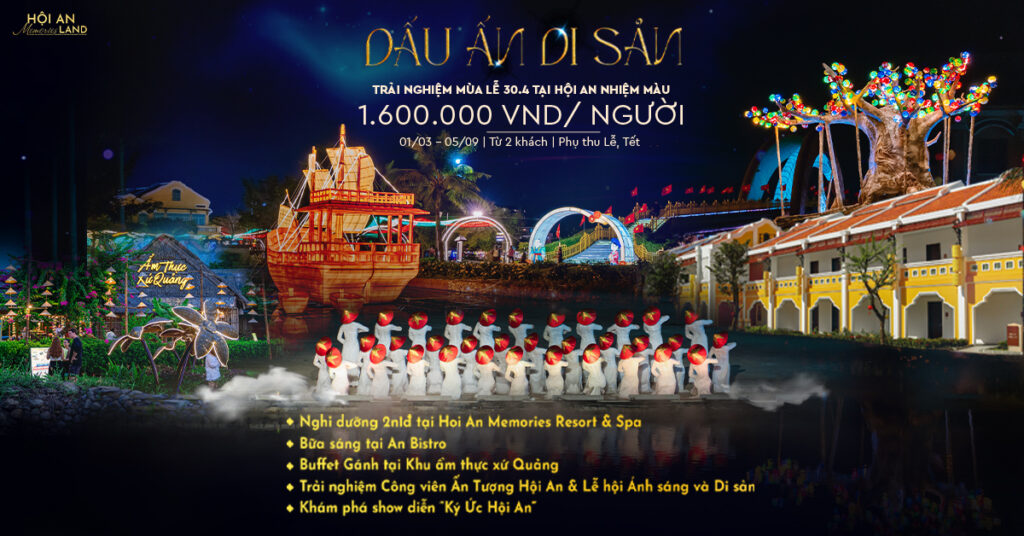
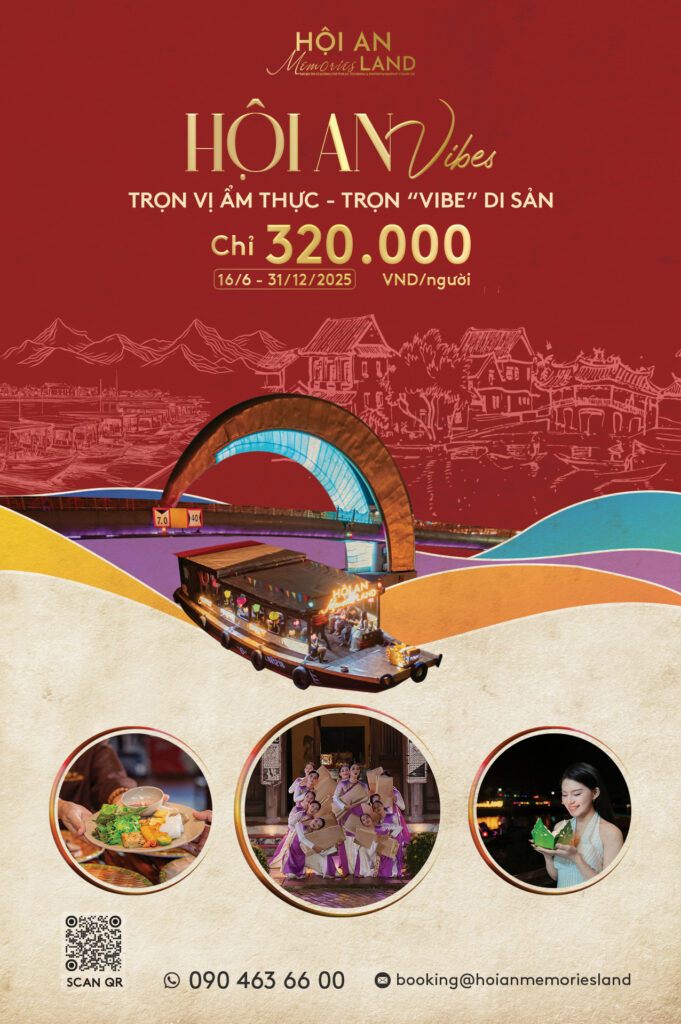
After exploring Hoi An Silk Village, visitors can continue their journey to visit the Old Town, enjoy the Hoi An Memories show, or choose to stay at resorts near the center like Hoi An Memories Resort & Spa to easily explore the culture and unique lifestyle of Hoi An.
>>> Discover more: A list of long-standing traditional craft villages in Hoi An