Hoi An is not only an ancient town of yellow walls, tiled roofs, and lanterns. Behind its quiet beauty is a layered history: from prehistoric settlements and Sa Huynh culture to Champa influences, the southward expansion of Vietnamese communities, the bustling international trading port of Faifo, and its journey to becoming a UNESCO World Heritage Site.
Seen along a historical timeline, the history of Hoi An can be understood as the story of a river-mouth and coastal region that continuously received, traded, and blended cultures. UNESCO describes Hoi An as an exceptionally well-preserved example of a Southeast Asian trading port from the 15th to the 19th century, where the architecture and street layout reflect a combination of local and foreign influences.
Quick summary of Hoi An’s history:
- Hoi An has early settlement layers connected to the Hoi An–Cham Islands area, with Bai Ong showing traces of human presence dating back more than 3,000 years.
- Around 2,000 years ago, Sa Huynh culture laid the foundation for Hoi An’s early pre-port settlement.
- From the 16th to the 18th century, the trading port of Faifo flourished thanks to its location in the lower Thu Bon River, the open trade policies of the Nguyen Lords, and international commerce.
- From the 19th century onward, Hoi An’s role as a trading port declined due to sedimentation, changing trade routes, policy shifts, and the rise of Da Nang.
- In 1999, Hoi An Ancient Town was inscribed by UNESCO as a World Cultural Heritage Site under criteria (ii) and (v).
1. When Was Hoi An Established?
Hoi An was not established at one single moment in time. In terms of settlement traces, people had lived in this region more than 3,000 years ago, especially around Bai Ong on Cham Islands. If we look at Hoi An as an urban trading port, its formation became clearer around the 15th and 16th centuries and reached its peak during the 17th and 18th centuries.
Hoi An’s formation can be summarized as follows:
| Period | Key evidence | Meaning in Hoi An’s history |
| More than 3,000 years ago | Traces of prehistoric residents at Bai Ong, Cham Islands | Early settlement foundation of the coastal river-mouth region |
| Around 2,000 years ago | Sa Huynh culture | Formation of an early pre-port settlement |
| 2nd–15th century | Champa period | Hoi An became an important port town within maritime trade networks |
| 15th–16th century | Vietnamese settlement and village formation | Foundation for Hoi An’s urban development under Dai Viet |
| 17th–18th century | The flourishing trading port of Faifo | Hoi An became a major international trade center of Dang Trong |
| From the 19th century | Decline of its port role | The Old Town avoided heavy modernization, helping preserve its heritage |
| 1999 | UNESCO inscription | Hoi An became a World Cultural Heritage Site |
The best way to understand Hoi An is this: the area had very early settlement layers, but the famous port town we know today was mainly shaped during the Dai Viet and Nguyen Lords period, when it became an important gateway for trade in Dang Trong.
1.1 The meaning of “Hoi An” and “Faifo” through different periods
The name “Hoi An” is often understood with a positive meaning: a place of peaceful gathering, harmony, and settled life. Throughout history, this area was also known by other names such as Hoai Pho, Hoai Pho, Faifo, and Pho Hoi.
The name Faifo is closely connected with Western documents and nautical maps. Some studies by the Hoi An Center for Cultural Heritage Management and Preservation suggest that Faifo may have a phonetic relationship with Hoai Pho/Hoai Pho, an old place name found in historical texts and associated with the area where Japanese traders lived and traded in Hoi An from the late 16th to early 17th century.
Each name reflects a different historical layer:
- Hoai Pho/Hoai Pho: suggests traces of riverside villages and market streets.
- Faifo: a familiar name in international trade, especially among Western merchants.
- Hoi An: the official name connected with the Ancient Town and today’s cultural heritage.
- Pho Hoi: a familiar local name that emphasizes the town’s commercial, urban, and multi-community character.
In other words, Hoi An’s names are not just a matter of language. They are the “fingerprints” of a town once located at the meeting point of many trade flows, resident communities, and cultural systems.
1.2 Geographic advantages that shaped a major trading port
Hoi An is located in the lower Thu Bon River area, near Cua Dai estuary, allowing it to connect a resource-rich inland region with international maritime routes on the East Sea. This was the core condition that helped Hoi An grow from a riverside settlement into a trading port.
UNESCO notes that Hoi An Ancient Town is located near the mouth of the Thu Bon River and was once a small-scale but widely active trading port with Southeast Asia, East Asia, and the rest of the world from the 15th to the 19th century.
Hoi An’s location offered three major advantages:
- River-mouth and coastal access: convenient for merchant ships to anchor, load, and unload goods.
- Inland connections: the Thu Bon River carried products from mountainous, midland, and delta areas to the port.
- Regional connectivity: Hoi An sat along maritime trade routes linking China, Japan, Southeast Asia, the Indian Ocean, and the West.
Its favorable geographic position supported waterway trade and created the foundation for the golden age of the Faifo trading port.
2. Before the Trading Port Era: Sa Huynh and Champa Civilizations
Before Hoi An became famous as an international trading port under the Nguyen Lords, it already had a long history connected with local residents, Sa Huynh culture, and the Champa Kingdom. These early layers are important for understanding why this area developed maritime trade so early.
2.1 Sa Huynh Culture – the foundation of early settlements
Sa Huynh culture is one of the most important cultural layers in the early history of Hoi An. The Sa Huynh Culture Museum in Hoi An displays hundreds of artifacts related to ancient residents of the Sa Huynh cultural system, dating back about 2,000 years. These communities are considered the owners of Hoi An’s early pre-port settlement.
Archaeological discoveries show that Sa Huynh residents in Hoi An did not live in isolation. They had exchange relationships with Southeast Asia, South India, and China, reflected through artifacts, burial practices, jewelry, ceramics, and settlement traces.
The role of Sa Huynh culture in Hoi An can be seen in three main points:
- It laid the foundation for long-term settlement in the river-mouth and coastal area.
- It shows early exchange capacity with regions beyond the local area.
- It created the conditions for continuous development from an early pre-port settlement to a Champa port town and later a Dai Viet trading port.
For that reason, the history of Hoi An should not begin only with the 17th-century Ancient Town. Beneath the Old Town is a deep layer of ancient settlement lasting thousands of years.
2.2 Hoi An under the Champa Kingdom
From around the 2nd to the 15th century, the Hoi An region belonged to the historical and cultural space of Champa. Sources from the Hoi An Center for Cultural Heritage Management and Preservation indicate that before the Hoi An trading port formed around the 15th and 16th centuries, this area had been an important Champa port town for many centuries.
Under Champa, the lower Thu Bon River region had favorable conditions for connecting the inland area with the sea. My Son, Tra Kieu, Cham Islands, and Hoi An were part of a connected cultural and commercial space. Goods, religion, techniques, and art from the Indian Ocean, maritime Southeast Asia, and China could move along sea routes and then travel inland.
The Champa imprint in Hoi An’s history is not found only in archaeological artifacts. It also appears in the region’s maritime culture, ancient trade networks, and openness to foreign influences.
2.3 The role of Hoi An in ancient regional trade networks
Hoi An did not suddenly become an international trading port in the 17th century. Long before that, this area had already participated in maritime trade networks during the Sa Huynh and Champa periods. Some studies of Hoi An and Champa suggest that the development history of communities in the Thu Bon River basin may date back a thousand years before the Nguyen Lords.
Within ancient trade networks, Hoi An played the role of a transfer point:
- From forests and plains to the sea.
- From international maritime routes into the inland region.
- From local products to regional markets.
- From outside cultural influences into the lives of local residents.
This explains why Hoi An developed rapidly once the Nguyen Lords opened the region to international trade. The port-town foundation already existed; it only needed the right political, economic, and global conditions to rise into a major commercial center.
3. A Historical Turning Point: Hoi An Becomes Part of Dai Viet
A major turning point in the history of Hoi An was the process through which Quang Nam became part of Dai Viet. From this point on, Vietnamese settlements, village institutions, craft industries, and the foreign trade policies of Dang Trong gradually shaped early modern Hoi An.
3.1 Southward expansion of Dai Viet
The year 1471 was an important milestone in the southward expansion of Dai Viet. King Le Thanh Tong established Quang Nam as the 13th administrative unit of Dai Viet, laying an administrative foundation for Quang Nam in Vietnamese history.
This event did not mean Hoi An immediately became a bustling port town. However, it opened the way for Vietnamese settlers to arrive, establish villages, reclaim land, organize production, and become more deeply involved in the economic network of the Thu Bon–Cua Dai region.
In the long term, the southward expansion and administrative organization of Quang Nam created the conditions for Hoi An to enter a new stage of development: from a port area with Champa foundations into a Dai Viet trading port, and later a major port of Dang Trong under the Nguyen Lords.
3.2 The formation of Vietnamese communities in Hoi An
Vietnamese communities in Hoi An formed through many waves of settlement. Villages such as Hoai Pho, Cam Pho, Thanh Ha, Kim Bong, and Cam Nam gradually appeared and became associated with farming, carpentry, pottery, fishing, trade, and port-related services.
Records about Hoi An place names indicate that villages such as Thanh Ha and Cam Pho may have formed around the late 15th to early 16th century. From the second half of the 16th century to the late 18th century, many other villages in Hoi An continued to emerge, including Thanh Chau, De Vong, Hoa Pho, Hoi An, Xuan My, Kim Bong, An My, and Tan Hiep.
The formation of Vietnamese communities brought three major changes:
- Village organization: communal houses, temples, wells, markets, and craft hamlets were established.
- Craft development: Kim Bong carpentry, Thanh Ha pottery, trade, and river-related occupations grew.
- Community interaction: Vietnamese residents lived alongside Chinese, Japanese, and merchants from many countries.
From this point, Hoi An became a multicultural living space while still maintaining a clear Vietnamese village foundation.
4. The Golden Age (16th–18th Century): Faifo as an International Trading Port
The 16th to 18th centuries were the brightest period in Hoi An’s history. During this time, the trading port of Faifo became one of the most important commercial gateways of Dang Trong, attracting merchant ships from Japan, China, Southeast Asia, and the West.
4.1 The role of the Nguyen Lords in developing the port
Hoi An’s prosperity was closely connected with the foreign and economic policies of the Nguyen Lords. In the context of Dang Trong needing resources to build its administration, develop new lands, and compete with Dang Ngoai, opening up to international trade became a strategic choice.
The Hoi An Center for Cultural Heritage Management and Preservation identifies Faifo–Hoi An as one of the most important seaports during the Nguyen Lords period. It served as a gateway for goods from Dang Trong to enter both domestic and international markets.
The role of the Nguyen Lords can be seen in several ways:
- Allowing foreign merchants to come and trade.
- Creating conditions for foreign communities to live, establish quarters, and build assembly halls.
- Developing local products from Quang Nam, such as silk, cinnamon, ceramics, forest products, and seafood.
- Turning Hoi An into a connection point between the inland economy and maritime trade.
Thanks to these policies, Hoi An was more than a harbor. It became an international town where money, goods, languages, beliefs, and lifestyles all met.
4.2 Japanese traders and the formation of the Japanese Quarter
Japanese merchants played a special role in the early development of the Faifo trading port. From the late 16th to the early 17th century, Japanese traders came to Hoi An to trade, live, and form their own quarter. Some sources suggest that Hoai Pho/Faifo was connected with the area where Japanese people lived in Hoi An, helping clarify the role of Japanese merchants in the early stage of the port’s rise.
In the early 17th century, Hoi An also received Japanese migrants, partly within the context of Japan’s 1614 ban on Christianity and expulsion of Western missionaries.
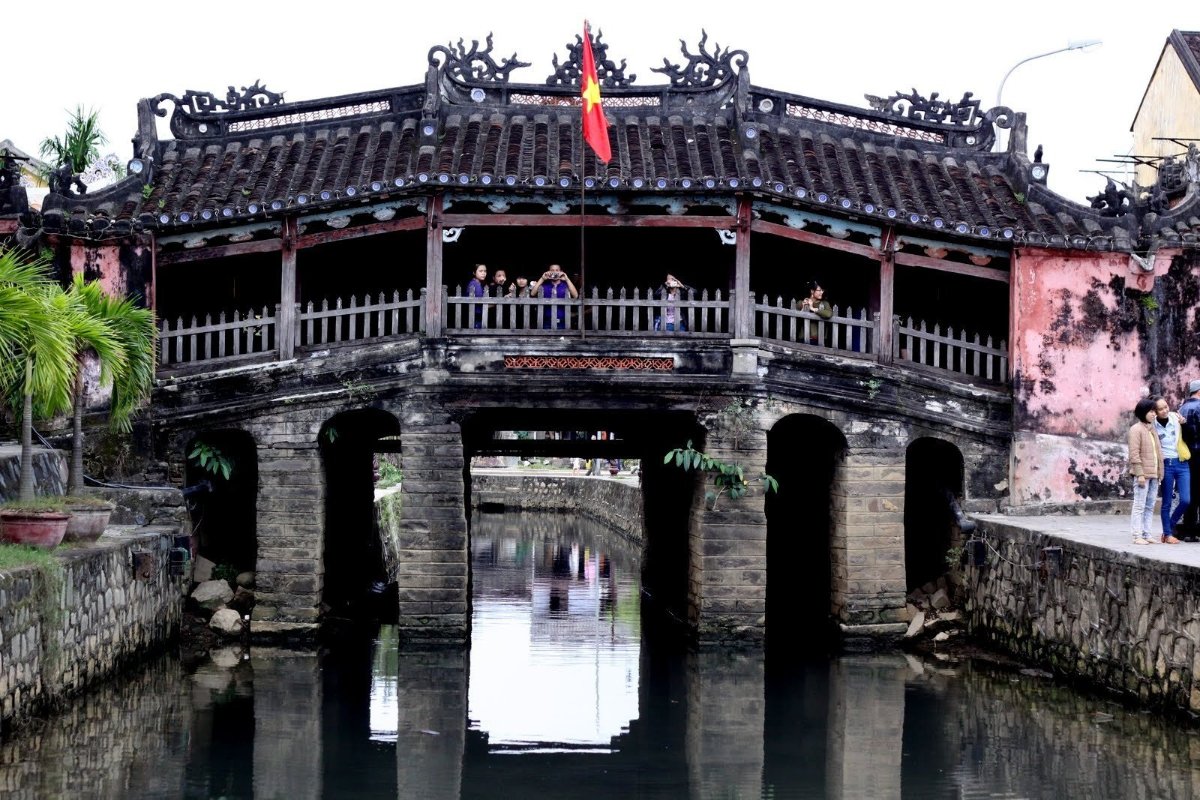
The most prominent Japanese imprint that remains today is the Japanese Covered Bridge. This structure is believed to have been built by Japanese merchants in Hoi An around the late 16th to early 17th century, which is why it is also known as the Japanese Bridge.
The Japanese Quarter no longer survives as a separate residential area, but Japanese influence remains present in the town’s urban memory, archaeology, the name Faifo, and the symbol of the Japanese Covered Bridge.
4.3 Chinese communities and the establishment of assembly halls
After the Japanese, Chinese communities became an important force in maintaining Hoi An’s commercial vitality. They came from different regions such as Fujian, Guangdong, Chaozhou, and Hainan, and established associations and assembly halls for worship, community support, and trade coordination.
Chinese assembly halls in Hoi An were not only places of worship. They also functioned as “community headquarters” for merchants living far from home, preserving identity, connecting people from the same homeland, and building trust in trade.
Notable assembly halls include:
- Fujian Assembly Hall.
- Cantonese Assembly Hall.
- Chaozhou Assembly Hall.
- Hainan Assembly Hall.
- Chinese Assembly Hall.
From a historical perspective, these assembly halls show that Chinese merchant communities once held a major economic and social position in Hoi An. From an architectural perspective, they are among the structures that give the Ancient Town its multicultural beauty.
4.4 Trade with Western merchants (Portuguese, Dutch, French)
From the 16th to the 18th century, Hoi An also became a destination for many Western merchants and missionaries. Sources from the Hoi An Center for Cultural Heritage Management and Preservation state that Westerners came to Hoi An during this period mainly for missionary work, trade, and accompanying political and military calculations.
Among them, the Portuguese were one of the earliest Western groups to arrive. Research on Portuguese trade activities indicates that in the 16th and 17th centuries, Hoi An was a bustling international port and became one of the first places in Dang Trong to establish trade relations with Portuguese merchants.
Other records also note that by the early 17th century, several European commercial powers such as Portugal, Spain, the Netherlands, and England had come to Hoi An for trade. Some documents also mention Hoi An’s commercial and religious connections with Portugal, the Netherlands, England, and France.
The Western presence made Hoi An a true meeting point between East and West. It was not only a place for exchanging goods but also a space of contact involving languages, religion, maritime techniques, cartography, and geopolitical awareness.
5. Decline Period (19th – Early 20th Century)
From the 19th century onward, Hoi An gradually lost its role as an international trading port. This decline did not come from a single cause, but from a combination of changes: shifting trade policies, natural sedimentation, changing maritime routes, and the rise of Da Nang.
5.1 Changes in trade policies under the Nguyen Dynasty
When the Nguyen Dynasty was established, the center of power, foreign trade management, and economic priorities changed significantly. As the centralized monarchy tightened control over foreign relations, Hoi An could no longer maintain the same flexible position it had enjoyed under the Nguyen Lords.
At the same time, the regional trade order also changed. International maritime routes, the role of East India companies, Western involvement, and political changes in East Asia all affected the appeal of Faifo.
Notably, this commercial decline indirectly helped preserve the Ancient Town. UNESCO notes that because Hoi An’s economy stagnated from the 19th century, the town was not under strong pressure to replace its old wooden buildings with modern materials.
5.2 Sedimentation of Cua Dai estuary and Co Co River
Natural change was an important reason behind Hoi An’s decline. Cua Dai estuary, river channels, and waterway connections gradually filled with sediment, making it difficult for large ships to enter as they once had.
Sources about the formation of Hoi An’s urban area state that the natural conditions of the trading port changed over time. Many deep river channels gradually became silted up, Cua Dai was filled by alluvium, boats had increasing difficulty moving through the area, and Hoi An’s economic importance gradually decreased.
The Co Co River was also once an important route connecting Da Nang and Hoi An. Research records that by the late 19th century, around 1891, commercial launches could still travel fairly easily on the river connecting Da Nang and Hoi An. Not long afterward, however, the river became so silted that even boats with a depth of around 30 cm had to wait for the tide to pass.
As waterway transport declined, Hoi An gradually lost its core advantage as a trading port.
5.3 The rise of Da Nang as a major port
The development of Da Nang was another important factor in Hoi An’s loss of status as an international port town. Da Nang had a deep bay, better conditions for receiving large ships, and attracted increasing French attention during the colonial period.
The relationship between Hoi An and Da Nang had long been close. Historical sources show that Da Nang and Hoi An were once connected by river. Travelers could reach Hoi An through Tourane Bay or Cua Dai, then follow the rivers that met around the Hoi An area.
When the river routes silted up and large ships could no longer enter Hoi An easily, while Da Nang offered better seaport conditions, the flow of trade shifted. From that point, Hoi An gradually became a town remembered for its former glory rather than a leading foreign trade center.
6. The Revival of Hoi An
Hoi An’s revival was not a process of building something new, but of recognizing the value of what was old. Its wooden houses, narrow streets, assembly halls, communal houses, temples, community life, and memories of the trading port became an exceptional heritage asset.
6.1 Preservation efforts of the Old Town after the war
After the war, many heritage sites in Central Vietnam were seriously degraded. Hoi An was fortunate to retain a relatively intact Old Town structure, but it still needed systematic research, restoration, and preservation.
In this journey, experts often mention the contribution of Polish architect Kazimierz Kwiatkowski, commonly known as Kazik. He played an important role in recognizing, introducing, and promoting the preservation of heritage sites such as Hoi An and My Son after the war. Some local sources credit Kazik with helping Hoi An revive and remember him as a “great friend of Hoi An.”
Hoi An’s preservation succeeded because it did not focus only on individual old houses. More importantly, Hoi An preserved:
- Its street structure.
- The relationship between houses, streets, and the river.
- Spaces of worship, assembly halls, communal houses, and temples.
- Traditional crafts and community activities.
- The rhythm of local life inside the heritage area.
That is why Hoi An is often called a living heritage site, not a closed museum.
6.2 Milestone of 1999: Hoi An becomes a UNESCO World Heritage Site
The year 1999 was the most important milestone in Hoi An’s revival. The UNESCO World Heritage Committee inscribed Hoi An Ancient Town on the World Heritage List under criteria (ii) and (v): Hoi An is an outstanding expression of cultural exchange in an international trading port and an exceptionally well-preserved example of a traditional Asian port town.
UNESCO recognition was not only a title. It created a legal, scientific, and communication foundation for Hoi An to strengthen preservation, develop cultural tourism, and raise community awareness.
After this milestone, Hoi An became one of Vietnam’s most prominent international destinations. However, the heritage title also created major pressure: how to develop tourism without losing authenticity, local life, and the town’s original cultural structure.
6.3 Hoi An today: a living heritage destination
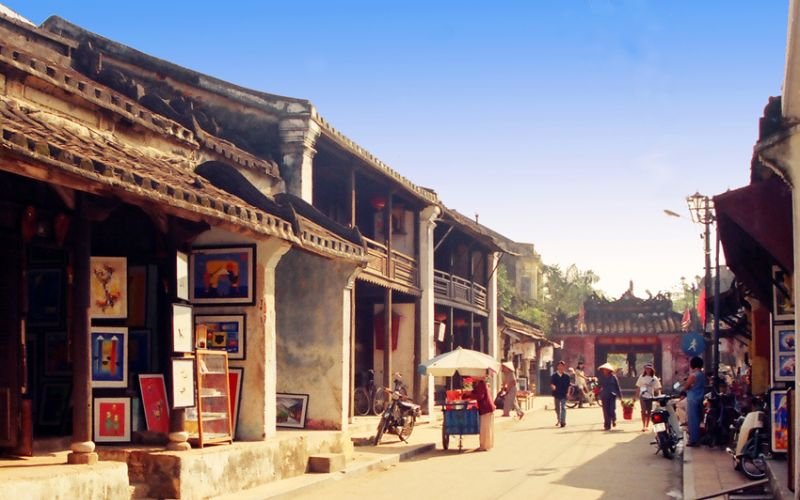
Today, Hoi An is both a famous tourist destination and a space of daily life, trade, worship, festivals, and traditional crafts. This is one of the major differences between Hoi An and many heritage sites that function mainly as tourist attractions.
UNESCO notes that Hoi An continues to be inhabited and operates as a commercial center. The living heritage that reflects both local and foreign communities once present in the town has been preserved and passed on.
However, being a “living heritage” also brings challenges:
- Tourism overload during peak seasons.
- Commercialization of the Old Town.
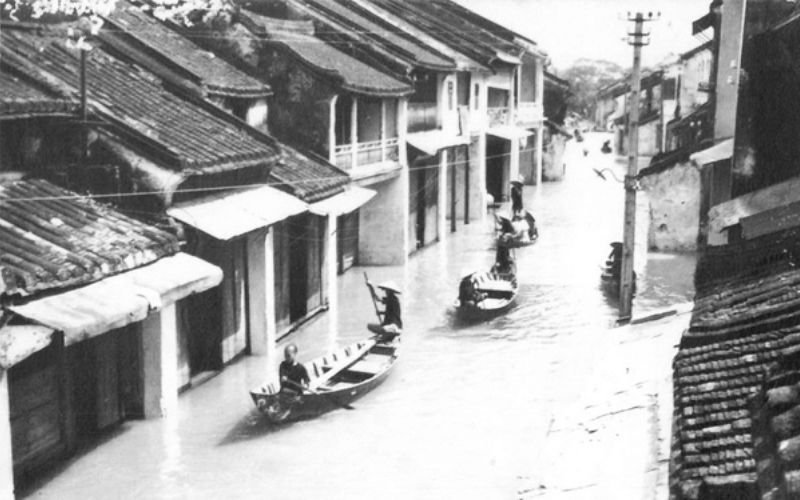
- Deterioration of wooden houses due to weather, floods, and humidity.
- Pressure to balance local livelihoods and heritage preservation.
- The risk of turning heritage into a simple photo backdrop.
The value of Hoi An today lies in its ability to preserve the soul of the town while adapting to modern tourism. Preserving Hoi An is therefore not only about restoring old houses. It is also about protecting the way local people live, trade, worship, cook, tell stories, and pass down traditional skills.
7. Architectural Landmarks Reflecting Hoi An’s History
Architecture is the easiest way to read the history of Hoi An. Each bridge, old house, assembly hall, and museum reflects a layer of residents, a period of trade, or a form of cultural exchange.
7.1 Japanese Covered Bridge – a symbol of cultural exchange
The Japanese Covered Bridge is the most famous symbol of Hoi An. It is believed to have been built by Japanese merchants around the late 16th to early 17th century to connect the Japanese residential area with the other side of a small creek. Later, the shrine on the bridge and the plaque reading “Lai Vien Kieu” added deeper religious and cultural meaning to the structure.
What makes the Japanese Covered Bridge special is its cultural exchange:
- Its origin is linked to Japanese merchants.
- Its urban setting is tied to Chinese and Vietnamese communities.
- Folk belief blends with its function as a bridge.
- Its roofed bridge architecture is rare in ancient Vietnamese towns.
The Japanese Covered Bridge is therefore more than a photo spot. It is an “architectural text” that tells the story of a time when different communities lived, traded, and created a shared identity in Hoi An.
7.2 Traditional ancient houses in Hoi An
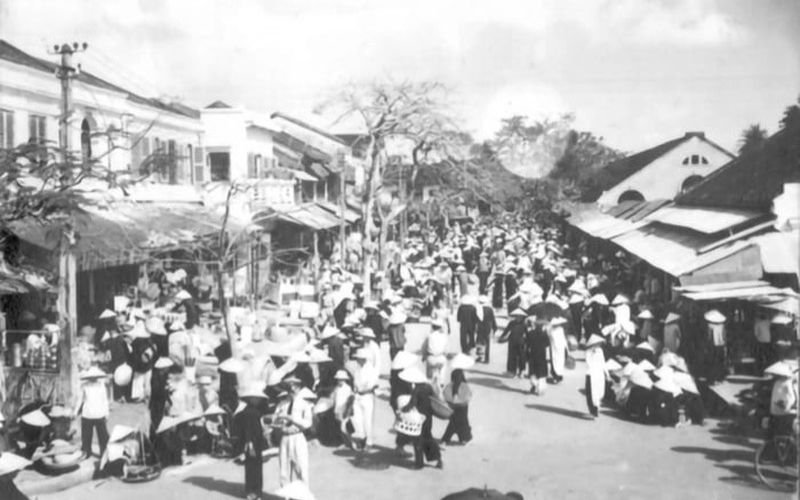
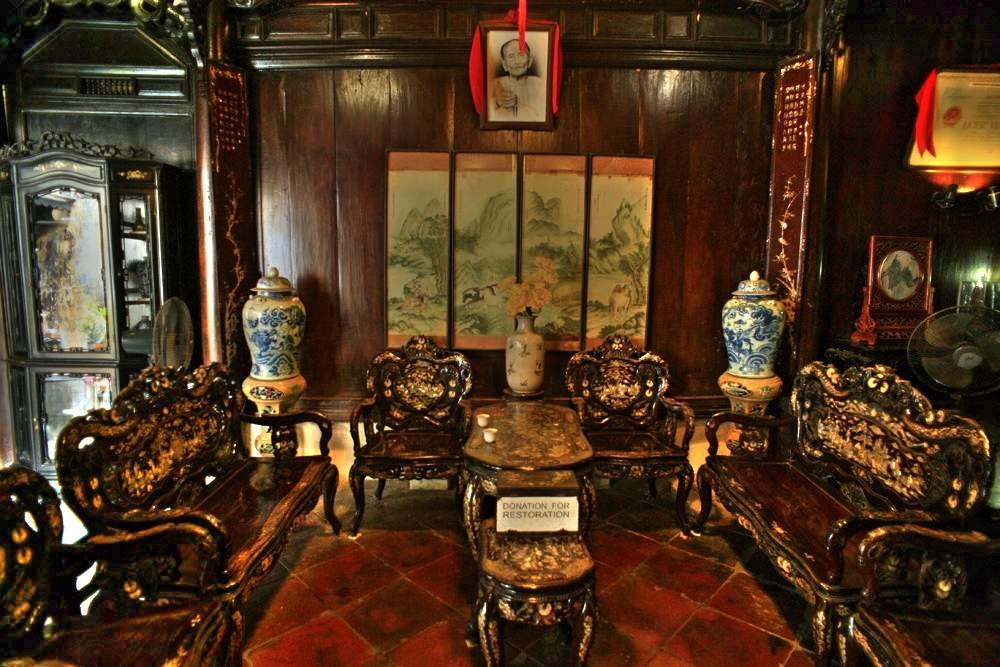
Hoi An’s ancient houses clearly reflect the structure of a trading port town. These houses are usually narrow in width and deep in length. The front opens to the street for business, while the back or auxiliary spaces connect with the river, courtyards, warehouses, and family life.
UNESCO describes Hoi An Ancient Town as having an organically developed street system, with one main axis running parallel to the river and other streets and alleys intersecting it. Buildings face the street for convenient commercial exchange, while the rear connects with the river for loading and unloading goods.
Notable ancient houses such as Tan Ky, Phung Hung, and Quan Thang show a combination of Vietnamese, Chinese, and Japanese architecture, as well as commercial needs. Many structures have been restored over time but still retain traditional materials, proportions, facades, tiled roofs, and wooden frames.
7.3 Chinese assembly halls
Chinese assembly halls are clear evidence of the role of Chinese merchants in Hoi An’s history. These were places where people from the same homeland worshipped protective deities, organized ceremonies, met one another, supported the community, and maintained their identity far from home.
Architecturally, assembly halls often feature large gates, inner courtyards, main sanctuaries, dragon and phoenix decorations, ceramic reliefs, horizontal plaques, couplets, and vivid colors. Historically, they reflect the period when Hoi An was a multi-community town where commerce and belief were closely connected.
When visiting Hoi An, these assembly halls should not be seen only as photo spots. They are living documents of how Chinese merchant communities organized themselves, protected their beliefs, and adapted to a new land.
7.4 Historical and cultural museums
Hoi An’s museum system helps visitors understand the historical layers beneath the Ancient Town. The Hoi An Center for Cultural Heritage Management and Preservation has managed several thematic museums, including the Sa Huynh Culture Museum, the Museum of Trade Ceramics, the Museum of Folklore, the Museum of History and Culture, and other memorial spaces.
Among them, the Hoi An Museum of History and Culture displays artifacts, images, and documents related to different stages of the Ancient Town’s development, from prehistoric and protohistoric periods to Champa, Dai Viet, Dai Nam, and modern Vietnam.
If you want to understand the history of Hoi An more deeply, combine a walk through the Old Town with museum visits. The Ancient Town gives you a sense of space; the museums help explain why that space was formed, transformed, and preserved until today.
Conclusion
The history of Hoi An is a long journey from an ancient settlement area and Sa Huynh pre-port community to a Champa port town, a Dai Viet and Dang Trong trading port, and finally a World Cultural Heritage Site. Hoi An once flourished thanks to its river-mouth and coastal location, the open policies of the Nguyen Lords, and the presence of Japanese, Chinese, and Western merchants. It declined when natural conditions, trade routes, and policies changed, but that very slowdown helped the Old Town avoid intense modernization.
Today, Hoi An is memorable not only because it is beautiful. It stays with visitors because every roof, street, assembly hall, bridge, and museum contains a layer of memory. From the trading port of Faifo to a World Heritage Site, Hoi An is proof of the lasting vitality of a town that has known how to receive, blend, and preserve its identity through many centuries.
To experience the history of Faifo in a visual way, visitors can visit Hoi An Impression Theme Park and watch the Hoi An Memories live show. The park’s setting and the performance recreate the stages of development of the land along the Hoai River, especially the era of the bustling Faifo trading port with merchant ships, busy streets, and the cultural blend of Vietnam, China, and Japan. Through architecture, music, lighting, and performance, the history of Hoi An becomes more relatable and easier for visitors to feel.
For convenience in exploring the Old Town, museums, and cultural spaces, visitors can check out resorts in Hoi An with locations that fit their itinerary.